Skip to content

Pinpoint where to act before you commit resources.

We build spatial models that locate areas susceptible to wildfires, floods, erosion and other environmental processes, helping you prioritize studies, prevention measures and on-the-ground interventions.

01 / What changes in your work

From isolated maps to priorities you can defend

Today

  • Planning decisions based on isolated maps or on the experience of a few people.
  • Detailed studies allocated without clear priority criteria.
  • Environmental variables that are never cross-referenced.
  • Results that are hard to justify to third parties.

With spatial modeling

  • A continuous map that integrates the relevant variables of your study area.
  • Clear priorities to focus studies, prevention and investment.
  • Future scenarios to anticipate change.
  • Validation and uncertainty metrics that back every result.

02 / What we can model

Spatial questions, answered with models

First we define the decision you need to support; then we choose the method. These are some of the questions we can answer.

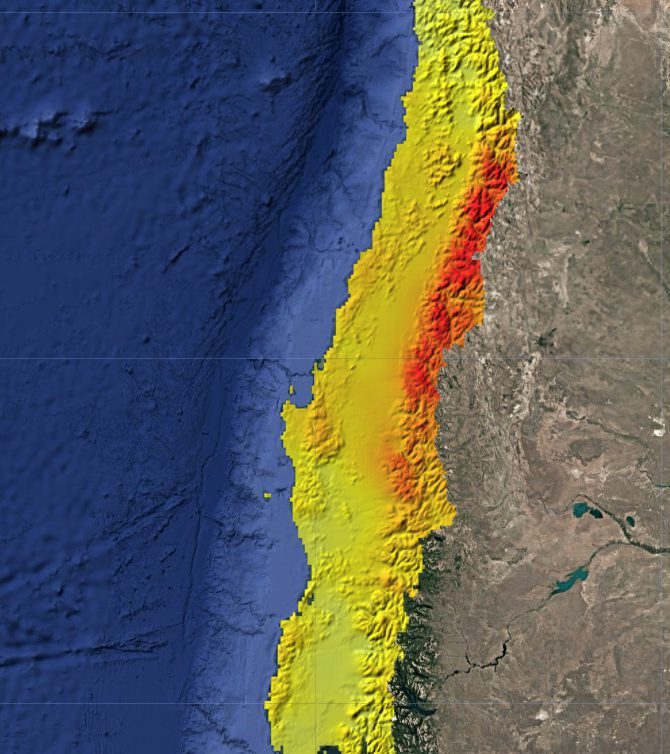
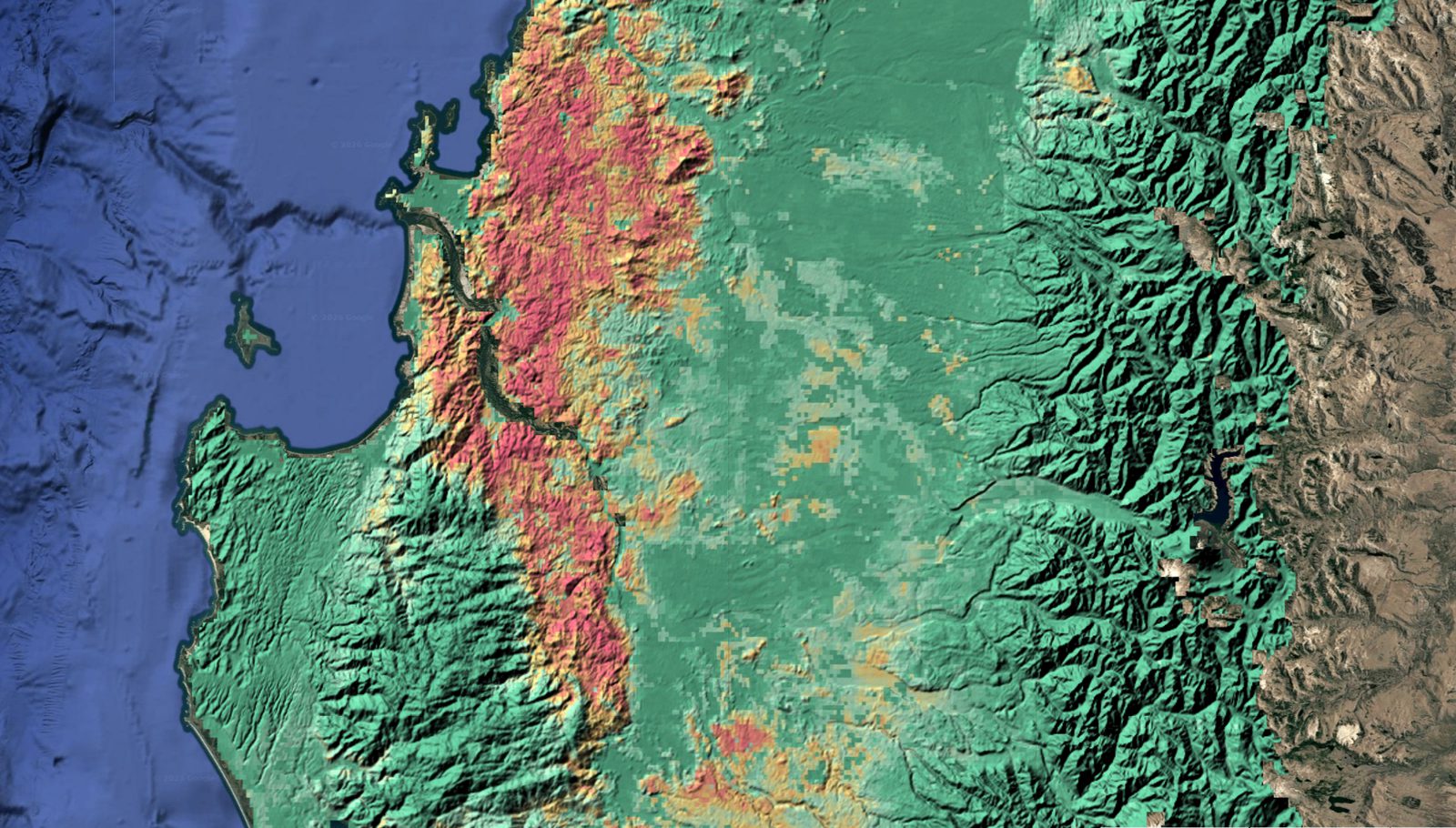
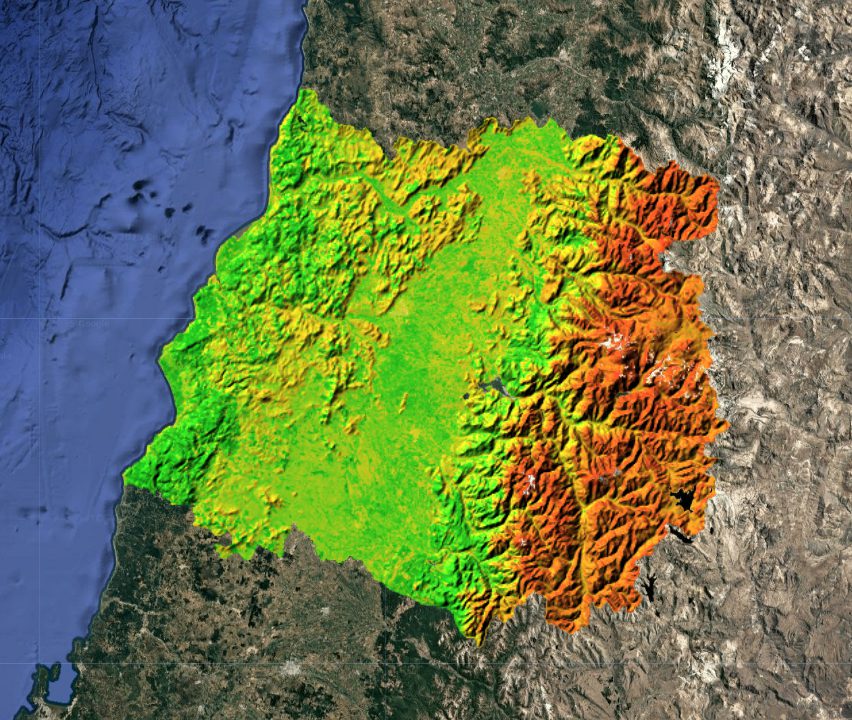
Water erosion susceptibility map of the Maule Region

Environmental risks

Susceptibility maps for prevention and planning

Susceptibility to floods, erosion, wildfires and droughts at the watershed or municipal scale, as a foundation for prevention and land-use planning.

Floods · Erosion · Wildfires · Droughts
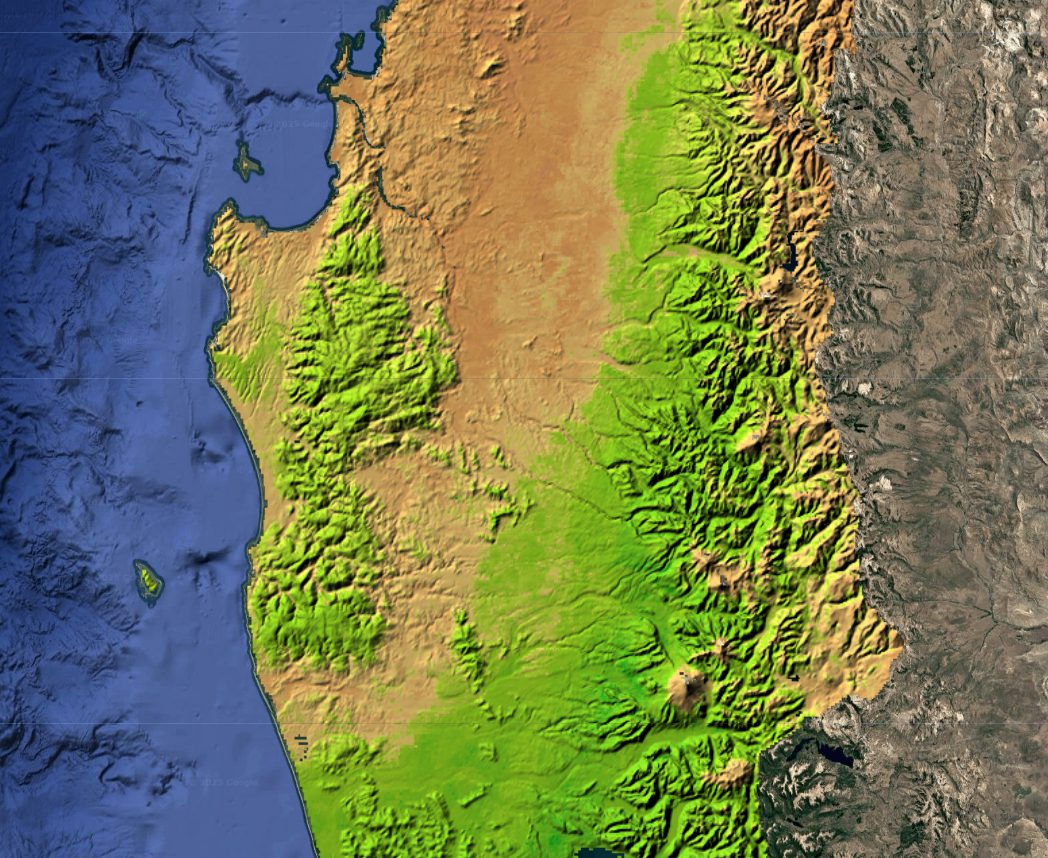
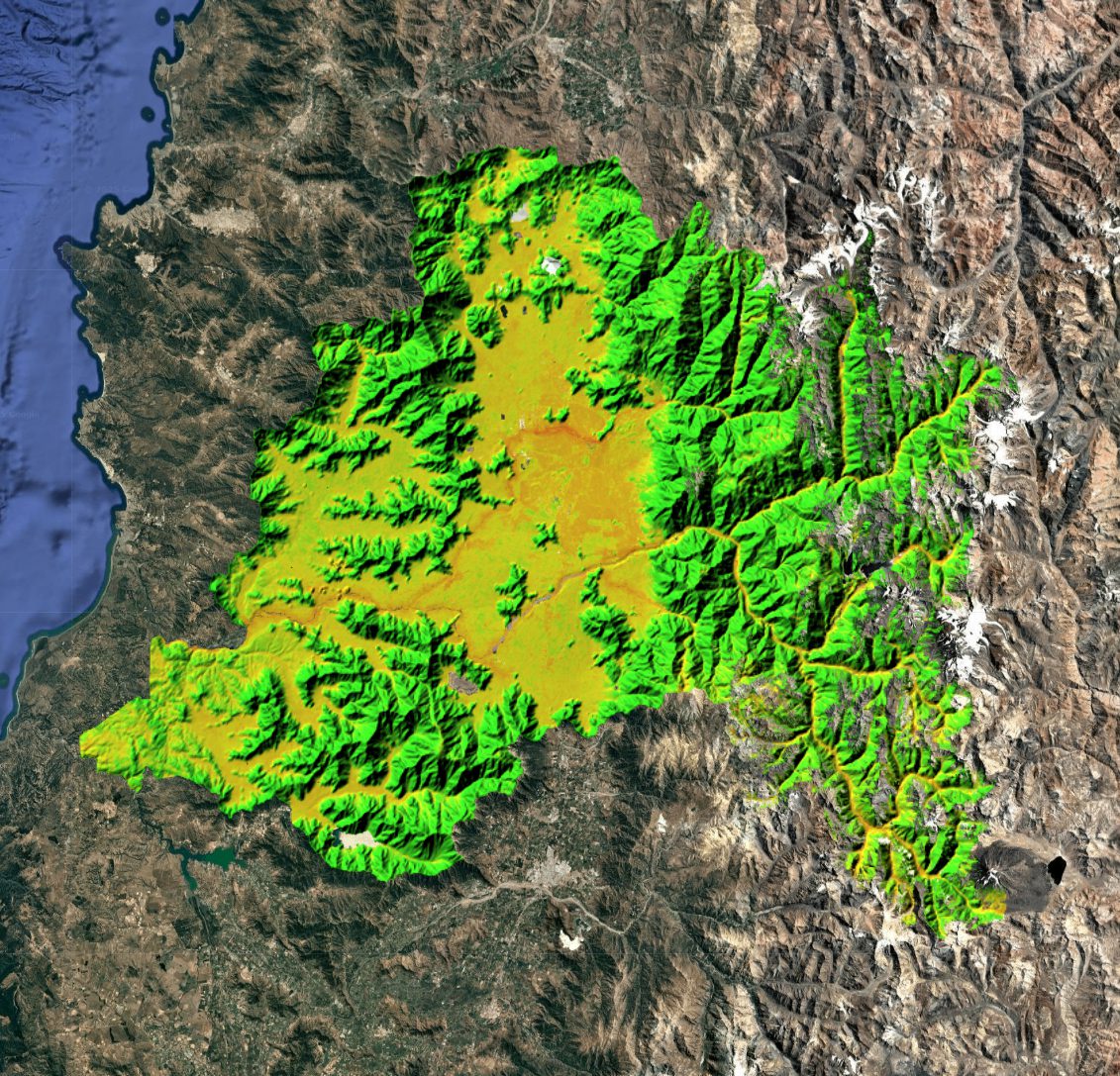
3D visualization of the spatial prediction of soil organic carbon

Predictive modeling

Environmental variables mapped where there are no measurements

High-resolution predictive maps that combine geostatistics and machine learning to estimate key variables across your entire study area.

Soil carbon · Species distribution · Crop yield

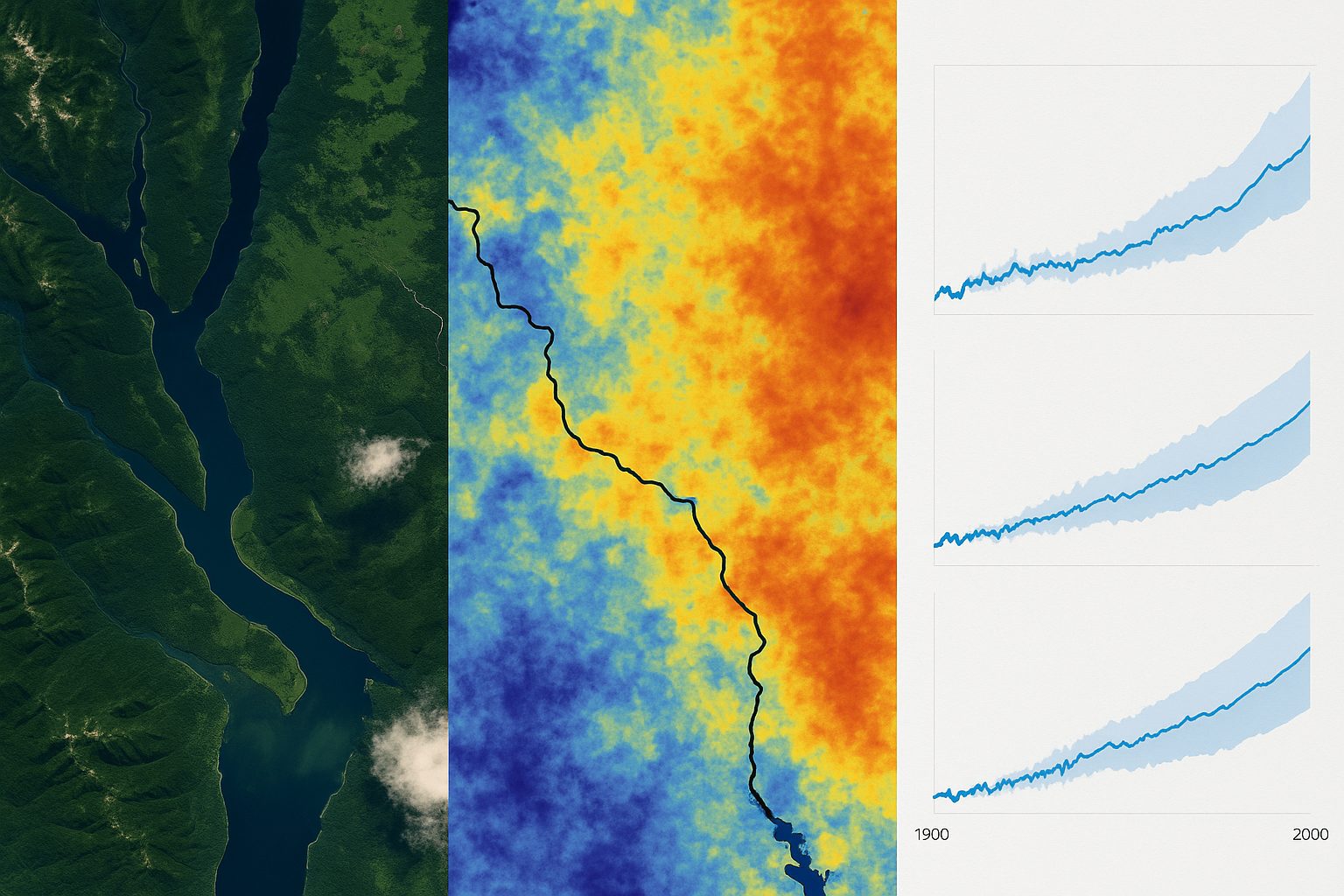
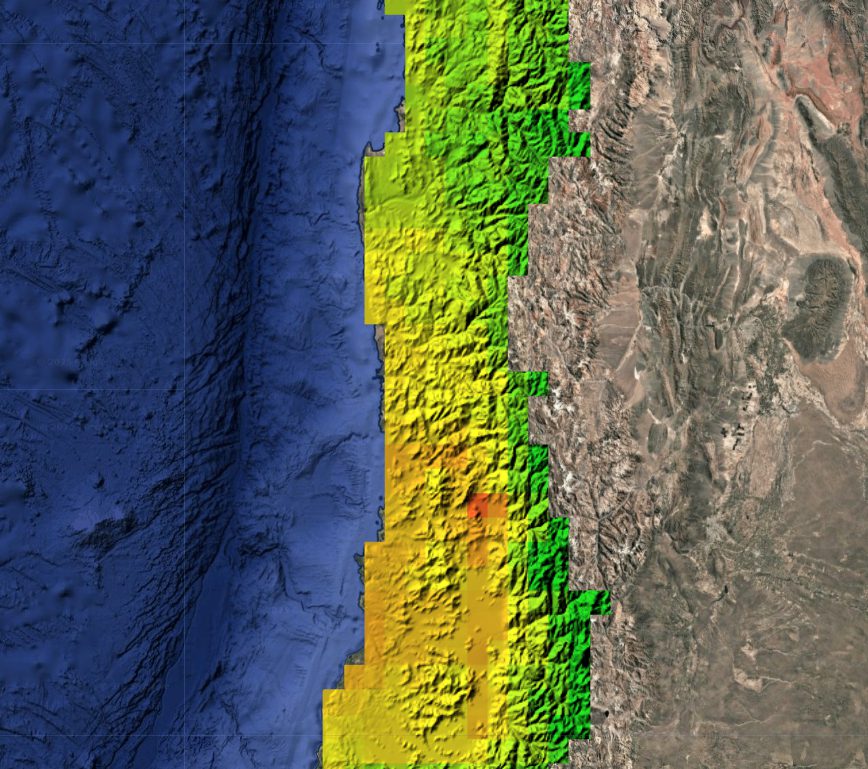
3D visualization of the annual precipitation trend in Chile

Climate change scenarios

How your area could change in the coming decades

Downscaling of hydroclimatic variables and bias correction of global climate models to obtain local-scale projections under different scenarios.

Bias correction · Downscaling · SSP scenarios

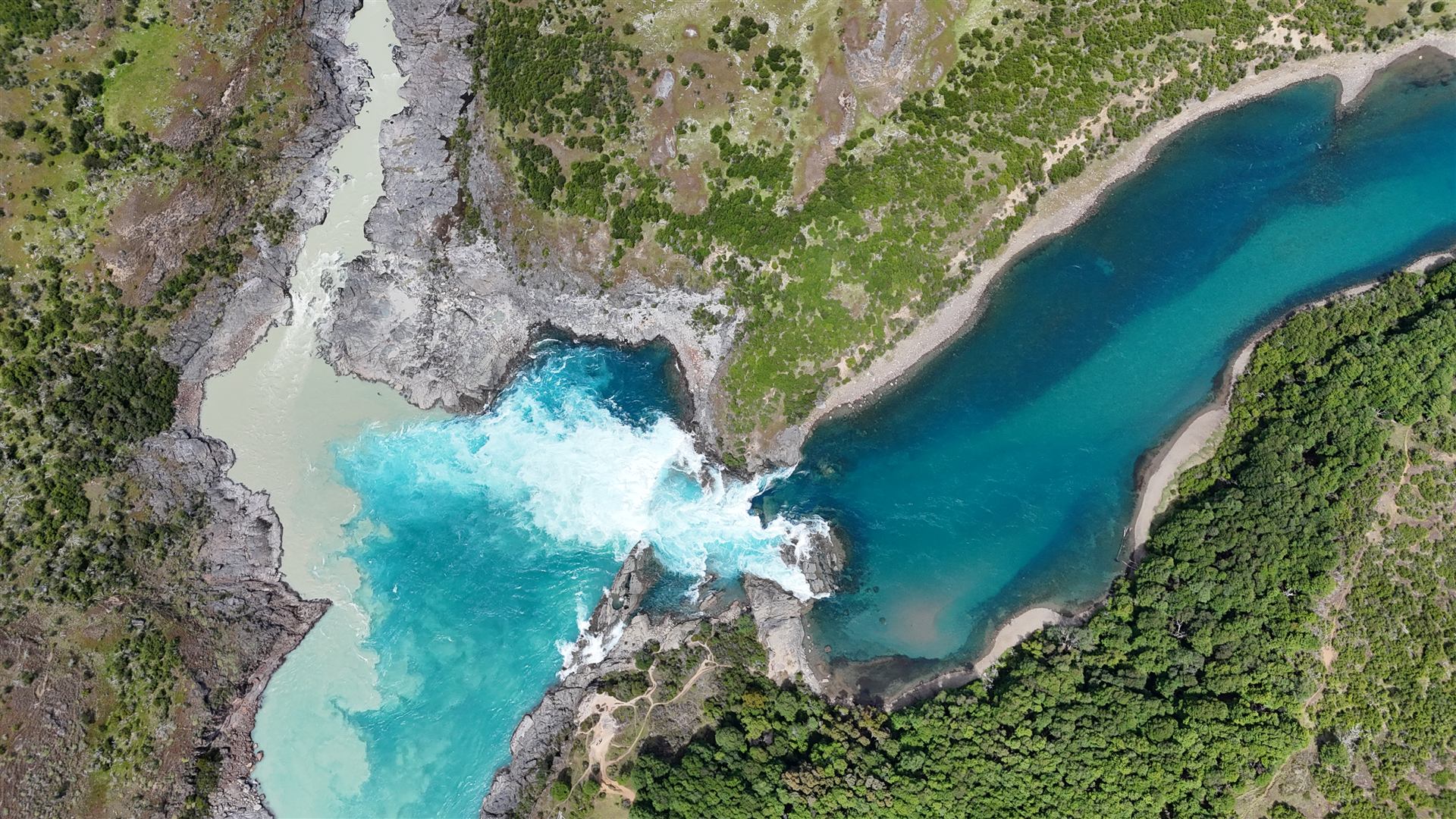
Hydrological analysis of a watershed and its drainage network

Hydrology & climate

Water, drought and climate at the watershed scale

Analysis of precipitation, temperature and evapotranspiration to assess droughts and water availability with high-resolution spatial data.

SPI / SPEI · Watershed delineation · Evapotranspiration

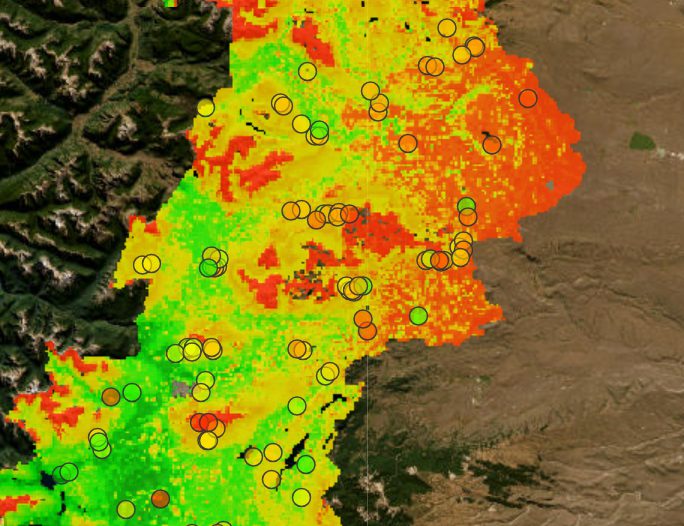
Continuous surface derived from spatial interpolation of point measurements

Geostatistics

From field samples to continuous surfaces

Spatial interpolation and autocorrelation analysis to turn point data into continuous maps, with uncertainty estimates and hybrid models that incorporate machine learning.

Kriging · Variograms · Hybrid models

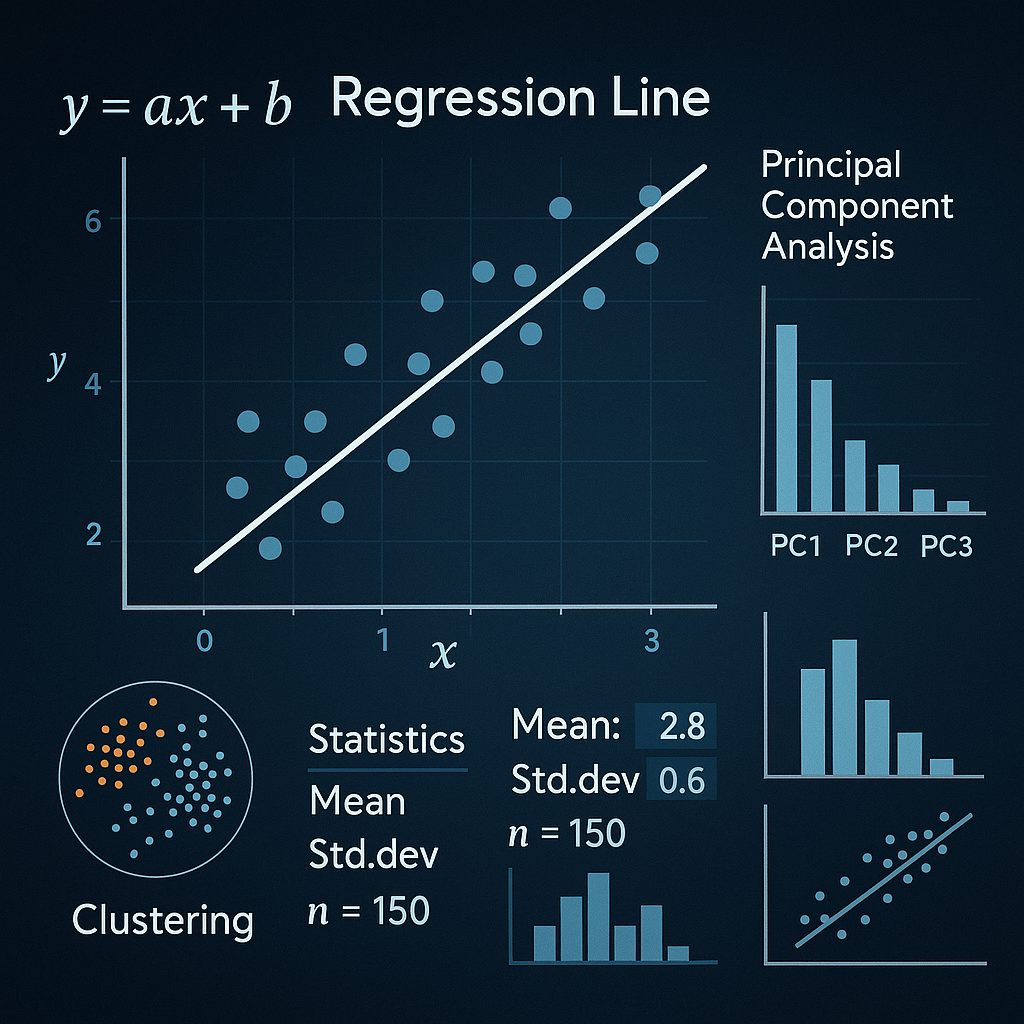
Multivariate statistical analysis charts

Custom statistics

The method your question calls for

From regressions and mixed models to time series and simulations: we choose the technique based on your data and your goals, not the other way around.

GLM · GAM · PCA · Clustering · Monte Carlo

03 / Rigor

Susceptibility, hazard and risk are not the same thing

Confusing them leads to the wrong decisions. That's why every map we deliver states explicitly what it represents, based on the information it actually incorporates.

  1. 01 · Susceptibility

    Where could it happen?

    How prone a place is to a given phenomenon, based on its conditions: slope, soil, vegetation or climate.

  2. 02 · Hazard

    How likely, and how intense?

    Adds the probability, frequency or magnitude with which the phenomenon may occur over a given period.

  3. 03 · Risk

    What could we lose?

    Combines the hazard with what is exposed—people, infrastructure, ecosystems—and how vulnerable it is.

How we validate every model

A map without validation is just an opinion in color. Every model comes with the information you need to know how much to trust it.

  • Independent data

    We evaluate the model with data it wasn't trained on and, where appropriate, with spatial validation.

  • Performance metrics

    AUC, RMSE, R² or others, depending on the model type, reported alongside the map.

  • Explicit uncertainty

    Ranges, uncertainty maps or model agreement, when the method allows it.

  • Methodology sheet

    Documentation of each model's data, period, resolution, assumptions and limitations.

Methods and tools

  • Random Forest
  • XGBoost
  • Neural networks
  • GLM · GAM
  • Mixed models
  • Kriging and variograms
  • PCA · Clustering
  • Monte Carlo
  • Species distribution
  • RUSLE
  • SPI · SPEI
  • GCM bias correction
  • R · Python · Google Earth Engine

05 / Let's talk

Do you need to prioritize where to act?

Tell us what decision you need to support and what data you have. We'll tell you what kind of model makes sense and what level of accuracy you can reasonably expect.

Request an initial assessment